
Trading fees are one of the most underestimated factors in cryptocurrency investing. Many traders focus entirely on price movement, leverage, and indicators, yet ignore the silent cost that gradually reduces overall profitability. Over time, fees can significantly impact long-term returns, especially for active traders.
This guide explains how Binance trading fees work and how to reduce them legally and effectively. Whether you are trading spot, futures, or using advanced order types, understanding fee structure is essential for sustainable performance.
1. Understanding Binance Trading Fees
Before applying any discount method, you must clearly understand how the fee system works.
1-1. Spot Trading Fees
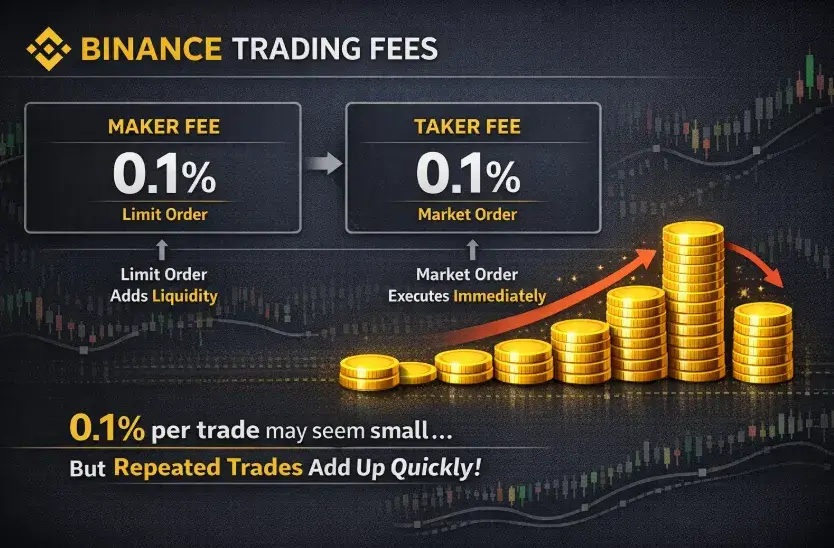
Binance spot trading generally starts at:
- Maker fee: 0.1%
- Taker fee: 0.1%
If you place a limit order that adds liquidity to the order book, you are charged a maker fee. If you execute immediately using a market order, you pay the taker fee.
Even though 0.1% appears small, repeated trades compound the cost significantly over time.
1-2. Futures Trading Fees
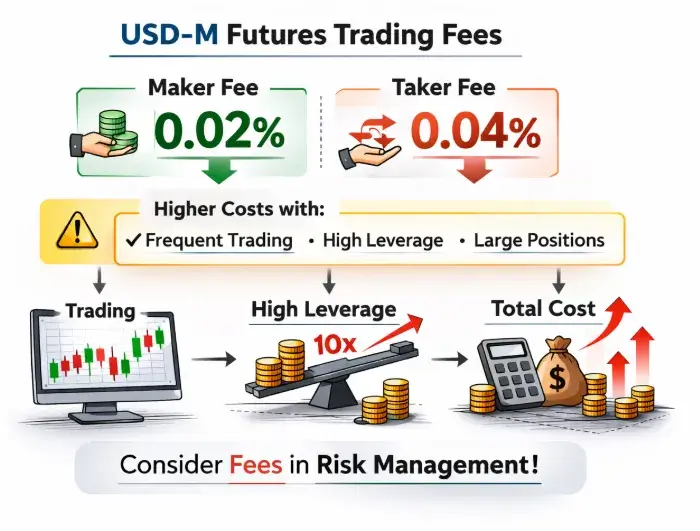
For USD-M futures, the standard rates are typically:
- Maker fee: 0.02%
- Taker fee: 0.04%
Although these percentages seem small, frequent trading, high leverage, or large position sizes can significantly amplify total expenses. Futures traders must consider fees as part of risk management.
2. Interactive Binance Fee & Profit Calculator
Use this tool to estimate your trading costs and see how much you can save by using BNB discounts.
Binance Fee Estimator
Optimize your trading costs for 2026
*Real-time network gas fees and slippage are not included.
3. How to Reduce Binance Fees Legally
Reducing fees is not about shortcuts. It is about using the platform efficiently and strategically.
3-1. Use BNB to Pay Trading Fees
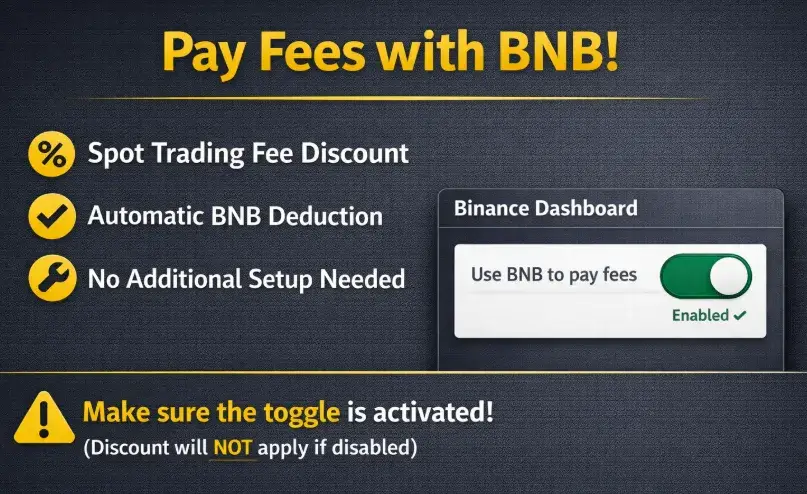
One of the simplest methods is enabling the option to pay fees using BNB.
Benefits:
- Spot trading fee discount
- Automatic deduction from BNB balance
- No additional setup required
Make sure the toggle is activated in your Binance dashboard. Without activation, the discount will not apply.
3-2. Register with a Fee Discount Referral Code
When creating a new Binance account, using a valid referral code can provide a permanent trading fee discount.
This discount:
- Applies automatically to eligible trades
- Works alongside BNB discount
- Does not increase your trading cost
Important: Referral discounts only apply during account registration. They cannot be added after the account is already created.

3-3. Increase VIP Level
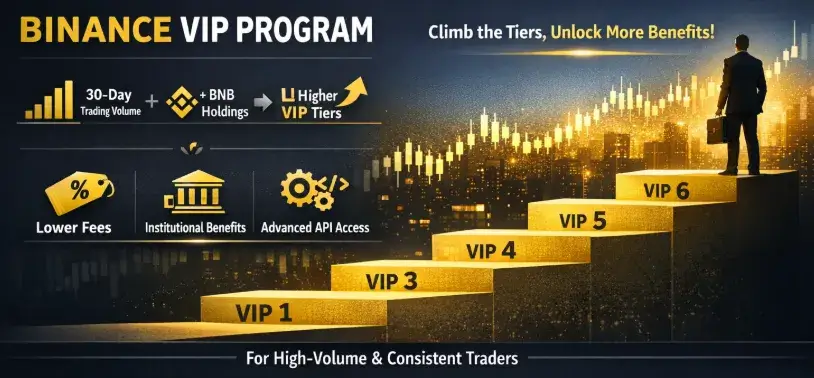
Binance offers a VIP tier system based on:
- 30-day trading volume
- BNB balance holdings
Higher tiers unlock:
- Reduced maker and taker fees
- Institutional-level trading advantages
- API benefits for automated traders
This strategy is more suitable for high-volume traders, but consistent traders can gradually move up tiers.
3-4. Use Maker Orders Strategically
Maker orders usually cost less than taker orders.
Instead of entering positions with market orders, consider:
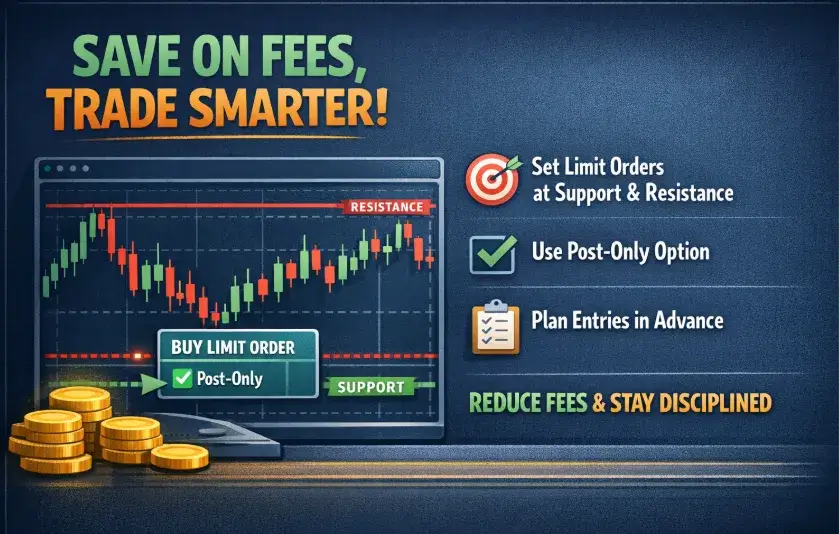
- Setting limit orders near support or resistance
- Using post-only options
- Planning entry levels in advance
This approach reduces fees and encourages disciplined execution.
4. Hidden Costs Traders Often Ignore
Reducing visible trading fees is important, but other hidden costs also affect performance.
4-1. Funding Rates in Futures
Futures trading includes funding payments between long and short positions.
Funding:
- Occurs every 8 hours
- Changes depending on market imbalance
- Can become expensive during strong trends
Even with low trading fees, funding costs can reduce profitability if positions are held too long.

4-2. Slippage
Market orders during volatile conditions may execute at worse prices than expected.
This indirect cost:
- Increases effective trading expense
- Is more common during high volatility events
- Can be reduced by using limit orders
Slippage is often ignored, yet it directly affects net returns.

5. Risk Factors and Realistic Expectations
It is important to remain realistic.
Lower fees do not guarantee profitability.
Many traders overtrade simply because fees are reduced. This leads to:
- Emotional trading
- Excessive leverage usage
- Higher liquidation risk
- Capital erosion despite fee discounts
A fee discount is a tool, not a strategy.
Sound risk management, stop-loss discipline, and capital allocation remain far more important than small fee reductions.

6. Who Benefits Most from Fee Optimization
Fee optimization is especially useful for:
- Scalpers
- High-frequency traders
- Futures traders using leverage
- Algorithmic traders
Long-term spot investors benefit less from fee reductions but still gain advantages over extended holding periods.

7. Step-by-Step Setup for Maximum Fee Efficiency
- Register using a valid fee discount referral code
- Activate BNB fee payment in account settings
- Maintain a small BNB balance
- Prefer limit orders over market orders
- Monitor funding rates before entering futures trades
- Track 30-day trading volume for potential VIP upgrades
Consistency is key.

8. Additional Resources for You
💰 Trading Efficiency Hub on Hyukee.com
Compare Binance’s fee structure with other major exchanges to optimize your trading platform choice.
Discover which trading method offers the best efficiency for your specific capital and goals.
Apply your cost-saving knowledge to professional futures trading with smart TP/SL strategies.
💡 Editor’s Note: Maximizing Your Trading Setup
If you’re planning to start trading on Binance, using a partner referral link is the most effective way to reduce long-term costs. You can secure a 20% fee rebate applied directly to your account.
Apply 20% Discount to My Account →9. Final Thoughts
Trading fees are small in isolation but powerful in accumulation. Professional traders calculate net return after fees, not gross profit.
If your goal is long-term growth in cryptocurrency markets, controlling trading costs is a foundational skill.
- Lower fees improve capital efficiency.
- Capital efficiency improves sustainability.
- Sustainability improves long-term success.
Approach Binance not just as a trading platform, but as a cost-managed financial environment.

10. Frequently Asked Questions
Q1. Can I add a referral discount after creating an account?
No. Referral discounts must be applied during account registration.
Q2. Does paying with BNB reduce both spot and futures fees?
Yes, if enabled and supported by the trading type.
Q3. Are VIP levels automatic?
Yes. VIP tiers update automatically based on 30-day trading volume and BNB balance.
Q4. Do lower fees guarantee higher profits?
No. Profitability depends on strategy, discipline, and risk management.
Q5. Is futures trading cheaper than spot trading?
Futures maker fees are often lower, but funding costs and leverage risk can increase overall expenses.