“Master Binance Futures trading in 2026. Learn how to use leverage responsibly, understand the critical differences between Isolated and Cross margin, and implement professional TP/SL strategies to avoid liquidation and protect your capital in the volatile crypto market.”
1. What Is Binance Futures Trading?
Binance Futures trading is a derivatives trading system that allows traders to speculate on the price movements of cryptocurrencies such as Bitcoin and Ethereum without actually owning the underlying assets.
Instead of purchasing the coin itself, traders open positions based on whether they believe the price will rise or fall. This structure enables profit opportunities in both bullish and bearish market conditions.
The core feature that differentiates futures trading from spot trading is leverage, which allows traders to control larger positions with a relatively small amount of capital.
2. Key Features of Binance Futures
2-1. Leverage Trading
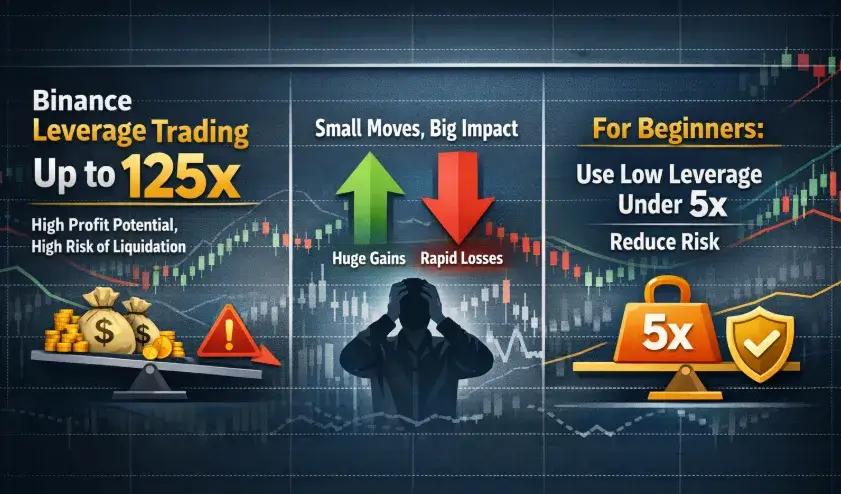
Binance provides leverage of up to 125x, meaning traders can open positions significantly larger than their initial margin.
However, high leverage increases both potential profit and potential loss. Even small market movements can result in substantial gains or rapid liquidation.
For beginners, using low leverage (under 5x) is strongly recommended to reduce risk exposure.
2-2. Long and Short Positions
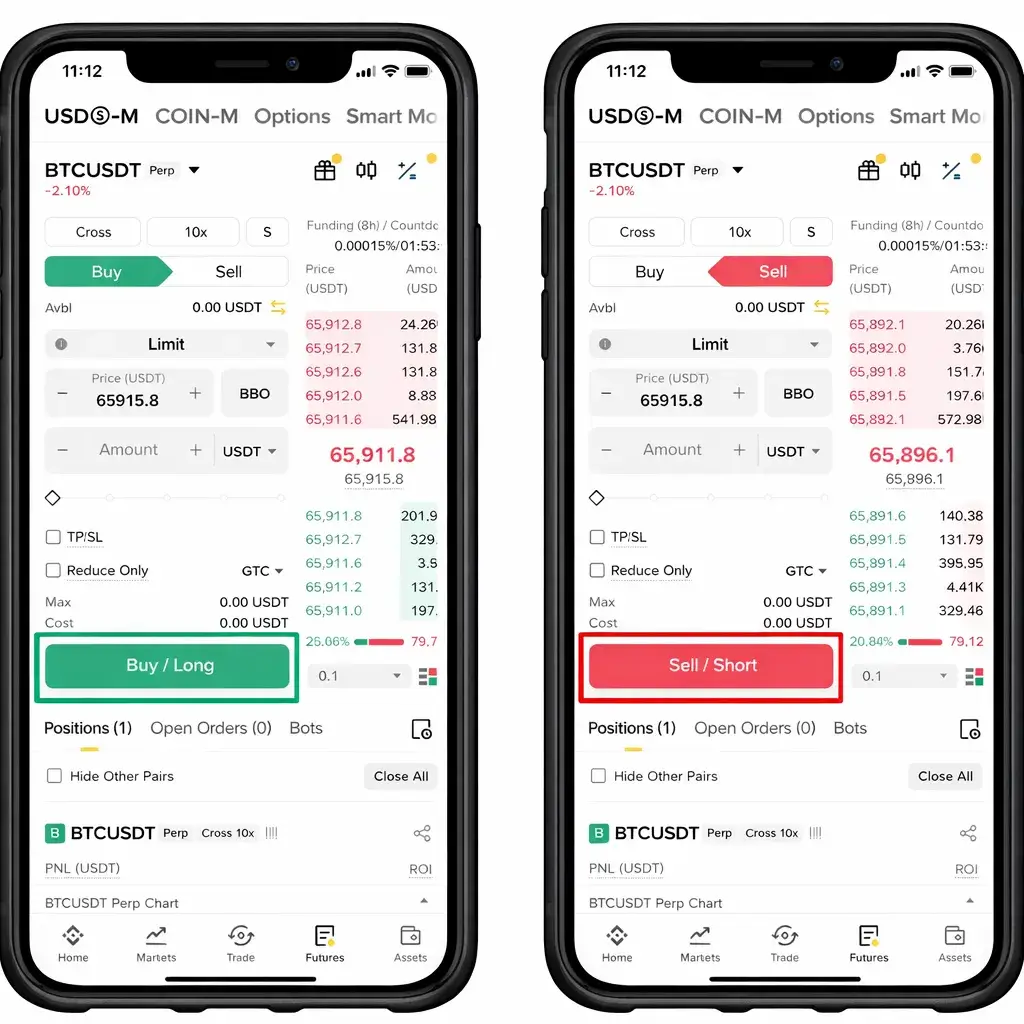
One of the most attractive features of futures trading is the ability to profit in both rising and falling markets.
- Long Position: Opened when you expect the asset price to increase.
- Short Position: Opened when you expect the asset price to decrease.
This flexibility makes futures trading highly strategic compared to traditional spot trading.
2-3. Liquidation Risk
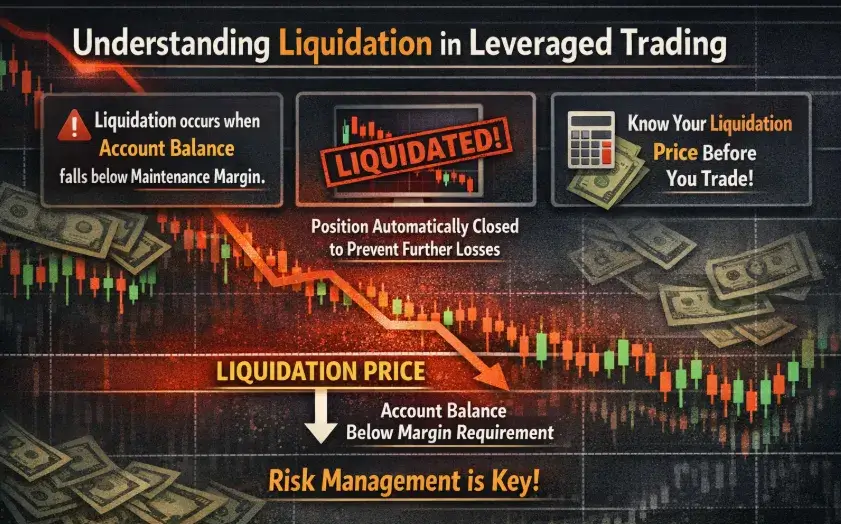
When trading with leverage, your position can be liquidated if the market moves against you beyond a certain threshold.
Liquidation occurs when your account balance falls below the maintenance margin requirement. At this point, the exchange automatically closes your position to prevent further losses.
Understanding liquidation price before entering a trade is essential for risk management.
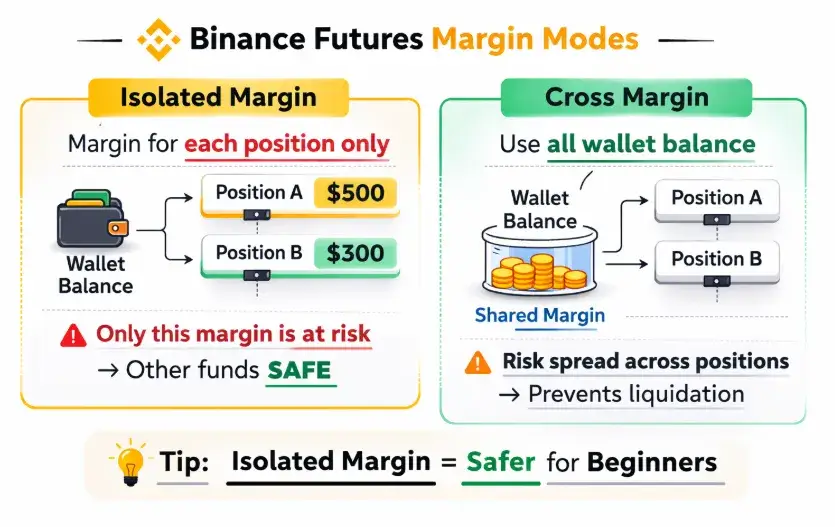
2-4. Margin Types: Isolated vs Cross
Binance Futures offers two types of margin modes:
- Isolated Margin: Only the margin allocated to a specific position is at risk. If the position is liquidated, other funds in your wallet remain unaffected.
- Cross Margin: All available balance in your futures wallet is used to prevent liquidation, spreading risk across positions.
For risk control, Isolated Margin is generally safer for new traders.
2-5. Trading Fees
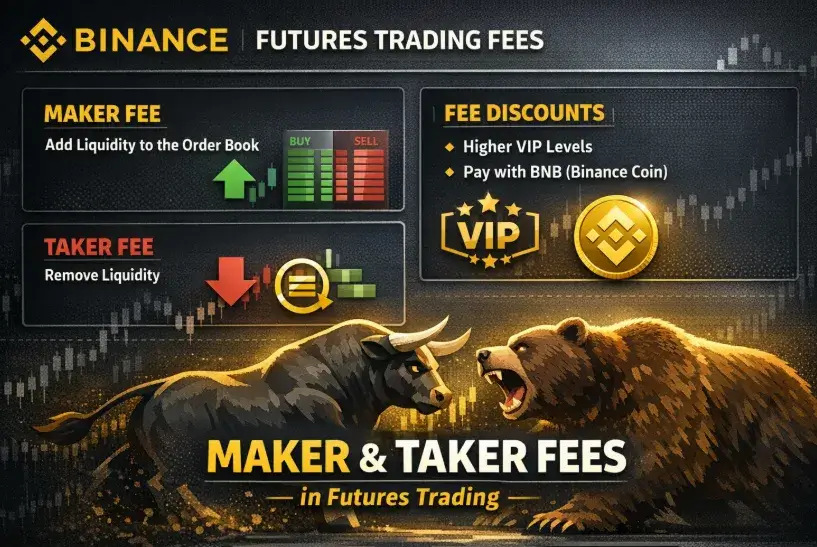
Binance charges Maker and Taker fees in futures trading.
- Maker Fee: Applied when you add liquidity to the order book.
- Taker Fee: Applied when you remove liquidity.
Fee discounts are available through higher VIP levels or by using BNB (Binance Coin) for payment.
☞ How to Reduce Binance Trading Fees by Up to 45%
3. Advantages of Binance Futures Trading
3-1. Two-Way Profit Opportunities
You can earn profits in both upward and downward markets.
3-2. Capital Efficiency Through Leverage
Smaller capital can control larger positions.
3-3. Advanced Order Types
Market orders, limit orders, stop-limit orders, and other professional trading tools are available.

4. Disadvantages and Risks
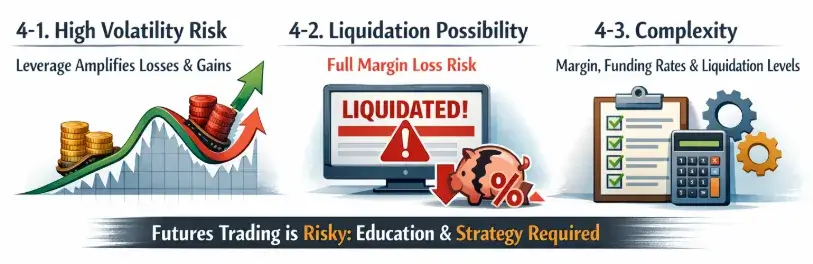
4-1. High Volatility Risk
Leverage amplifies losses as much as it amplifies gains.
4-2. Liquidation Possibility
Improper risk management can result in full margin loss.
4-3. Complexity
Futures trading requires understanding of margin mechanics, funding rates, and liquidation thresholds.
It is not recommended without proper education and strategy.
5. How to Avoid Liquidation in Binance Futures
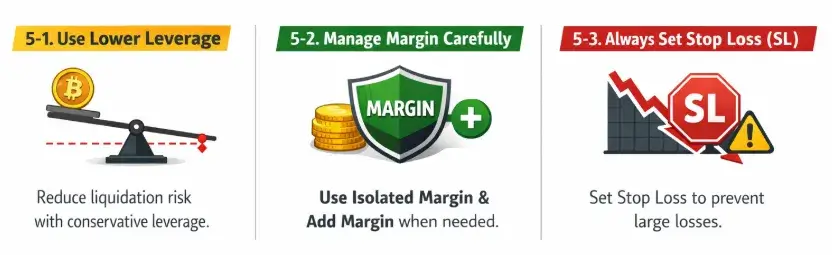
5-1. Use Lower Leverage
The higher the leverage, the closer your liquidation price becomes to your entry price.
Maintaining conservative leverage reduces forced liquidation risk.
5-2. Manage Margin Carefully
Using Isolated Margin prevents a single trade from draining your entire balance.
You may also add margin manually if a position approaches liquidation.
5-3. Always Set Stop Loss (SL)
Failing to use stop loss is one of the most common reasons traders face liquidation.
Predefining your maximum acceptable loss helps maintain long-term sustainability.
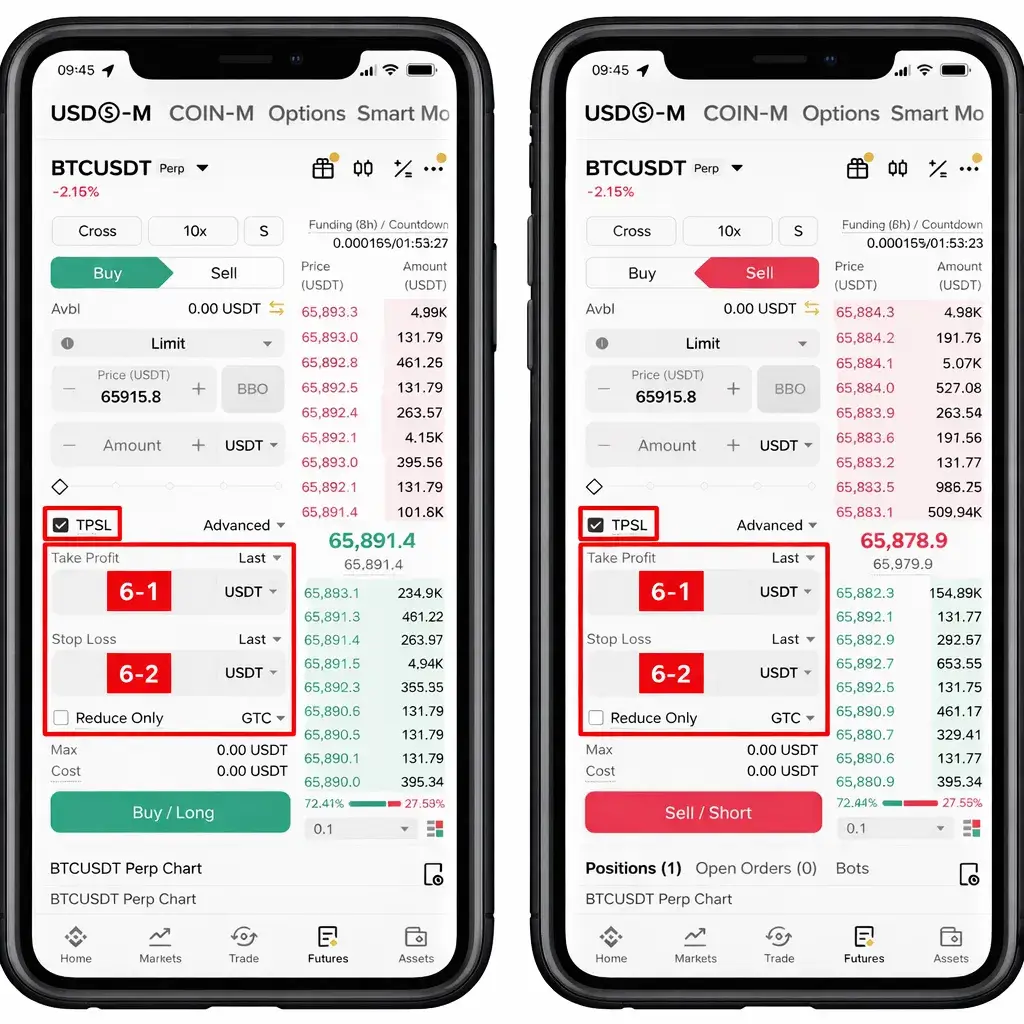
6. TP/SL Strategy Explained
TP (Take Profit) and SL (Stop Loss) are automated exit tools that protect capital and lock in gains.
6-1. Take Profit (TP)
Automatically closes a position when the price reaches your target profit level.
Example:
If you enter Bitcoin at $90,000 and set TP at $100,000, the system closes your position automatically when price reaches $100,000.
6-2. Stop Loss (SL)
Automatically closes a position when the market moves against you.
Example:
If you enter Bitcoin at $90,000 and set SL at $85,000, your position closes at $85,000 to limit further loss.
Professional traders always use TP/SL before entering a position.
7. Risk Management Principles for Long-Term Survival
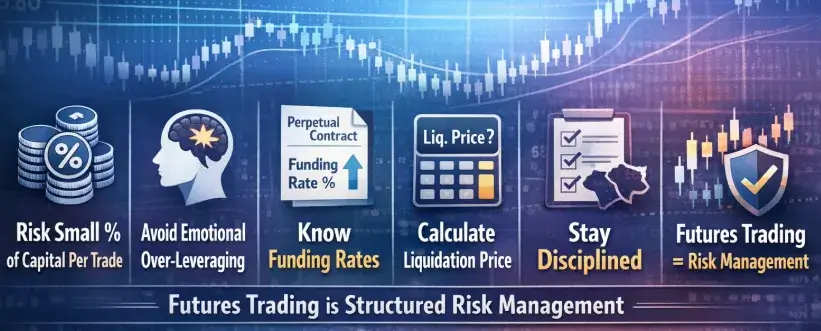
- Never risk more than a small percentage of total capital per trade.
- Avoid emotional over-leveraging.
- Understand funding rates in perpetual contracts.
- Calculate liquidation price before confirming an order.
- Maintain discipline regardless of short-term outcomes.
Futures trading is not gambling it is structured risk management.
8. Additional Resources for You
📊 Strategic Trading Guides on Hyukee.com
Avoid common pitfalls and learn the essential survival strategies for crypto futures trading.
Learn how to execute position flips quickly and efficiently on the Binance Futures interface.
💡 Editor’s Note: Maximizing Your Trading Setup
If you’re planning to start trading on Binance, using a partner referral link is the most effective way to reduce long-term costs. You can secure a 20% fee rebate applied directly to your account.
Apply 20% Discount to My Account →9. Frequently Asked Questions (FAQ)
Q1. Is Binance Futures suitable for beginners?
It can be, but only with proper education and low leverage usage. Beginners should start with small position sizes and focus on risk management.
Q2. What is the safest leverage to use?
Most professional traders recommend staying below 5x leverage, especially during volatile market conditions.
Q3. Can I lose more than my margin in Binance Futures?
In standard retail accounts, liquidation closes positions before the balance turns negative, but extreme volatility can still cause significant losses.
Q4. What is the difference between perpetual futures and quarterly futures?
Perpetual futures do not expire and use funding rates, while quarterly futures have fixed expiration dates.
Q5. Why is stop loss more important than take profit?
Because protecting capital ensures long-term survival. Without capital preservation, no strategy can succeed consistently.