
Step 1. Meta Description
A detailed comparison of Binance, Bybit, OKX, and Bitget trading fees. Spot and futures fees, maker/taker structures, token discounts, funding costs, and withdrawal fees explained to help you choose the best exchange.
☞ Binance Sign Up & KYC Verification Guide
Step 2. Binance vs Bybit vs OKX vs Bitget – Complete Exchange Fee Comparison
Choosing the right cryptocurrency exchange is not only about security or trading features.
For active traders, the most important factor is often the total trading cost.
Even a small difference in fees can dramatically affect your long-term profits.
If you trade frequently, use futures, or move funds between wallets, exchange fees quickly become a major expense.
In this guide, you will find a clear and detailed comparison of the four largest global crypto exchanges:
- Binance
- Bybit
- OKX
- Bitget
We will analyze:
- Spot trading fees
- Futures trading fees
- Maker vs taker differences
- Token discounts
- Hidden costs such as funding fees and withdrawal fees
By the end of this article, you will know exactly which exchange is most cost-efficient for your trading style.
Step 3. Understanding Exchange Fees – The Basics
Before comparing exchanges, it is important to understand the different types of fees that affect real trading costs.
3-1. Maker and Taker Fees
Every exchange uses the maker/taker system.
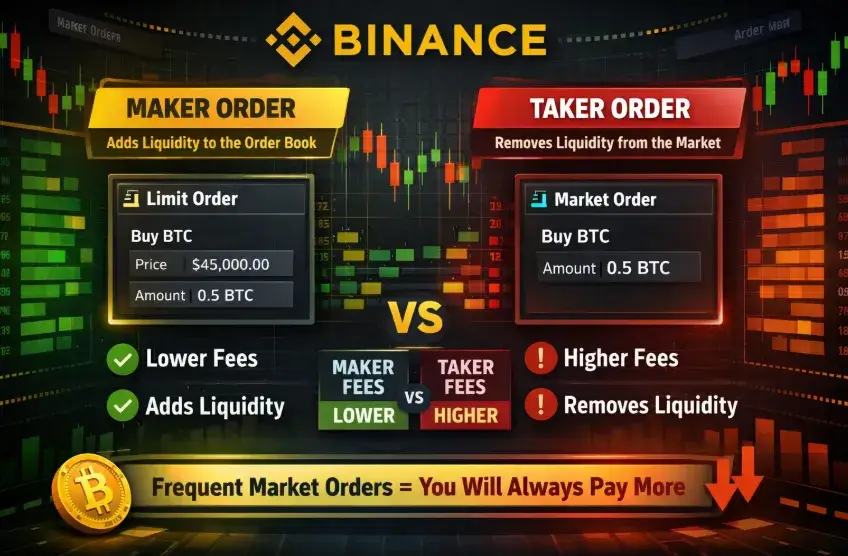
- Maker order: You place a limit order that adds liquidity to the order book
- Taker order: You use a market order that removes liquidity
In most cases:
- Maker fees are lower
- Taker fees are higher
If you trade using market orders frequently, you will always pay more.
3-2. Spot vs Futures Trading Fees
There is a big difference between:
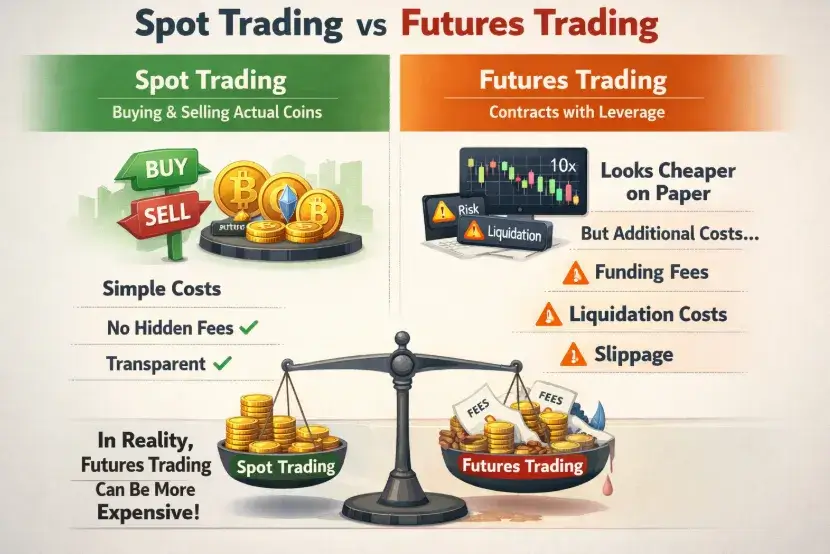
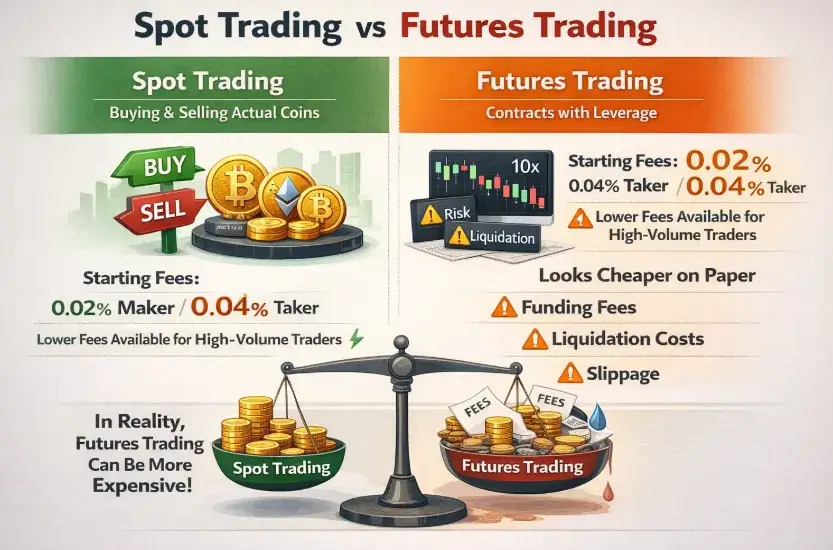
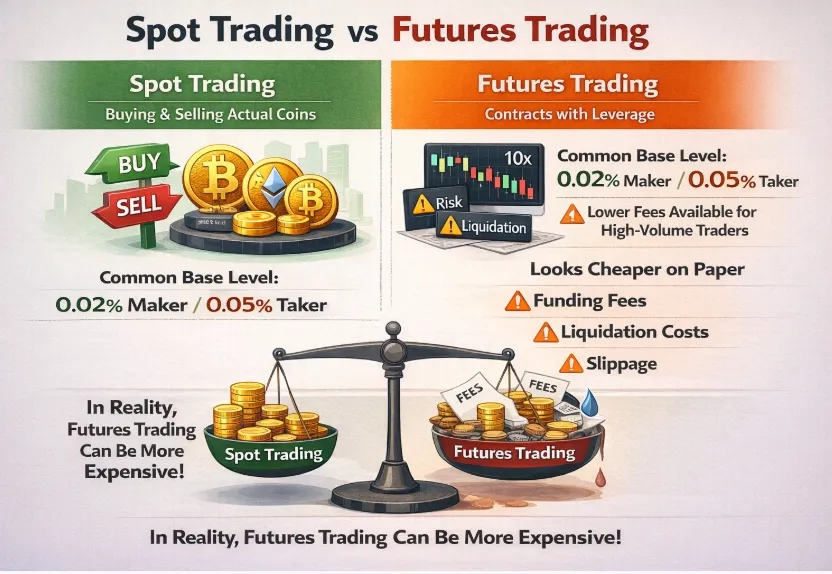
- Spot trading (buying and selling actual coins)
- Futures trading (trading contracts with leverage)
Futures fees usually look cheaper on paper, but additional costs exist such as:
- Funding fees
- Liquidation costs
- Slippage
Therefore, futures trading can become more expensive than spot trading in real situations.
3-3. Withdrawal Fees
Moving your crypto out of an exchange also has a cost.
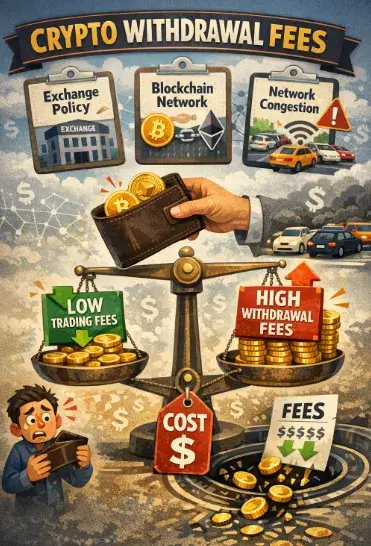
Withdrawal fees depend on:
- The exchange policy
- The blockchain network used
- Network congestion
Even if trading fees are low, high withdrawal fees can make an exchange expensive overall.
3-4. Hidden Costs
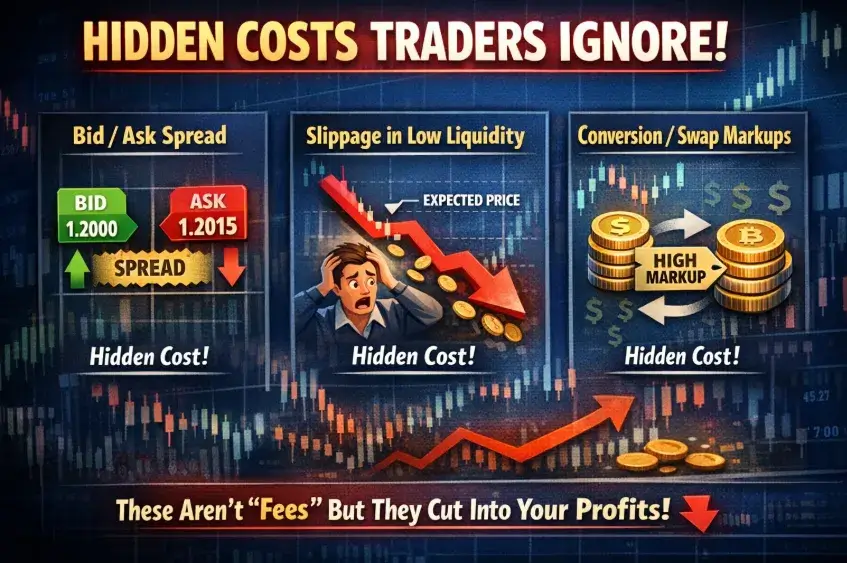
Many traders ignore additional costs such as:
- Spread between bid and ask
- Slippage in low-liquidity markets
- Convert/instant swap markups
These are not displayed as “fees” but still reduce your profit.
Step 4. Exchange Fee Comparison – Binance vs Bybit vs OKX vs Bitget
Now let’s compare the four exchanges in a simple and practical way.
Step 5. Binance – The Most Flexible Fee Structure
Binance is the largest cryptocurrency exchange in the world and offers one of the most detailed fee systems.
5-1. Spot Trading Fees
- Standard spot fee: 0.10% maker / 0.10% taker
- Discount available when paying fees with BNB token
- Additional discounts based on VIP level and trading volume

5-2. Futures Trading Fees
- Starting fees: 0.02% maker / 0.04% taker
- Lower fees available for high-volume traders
5-3. Advantages
- Very strong liquidity
- Clear VIP and discount system
- BNB token fee reductions
- Suitable for both beginners and professionals

5-4. Disadvantages
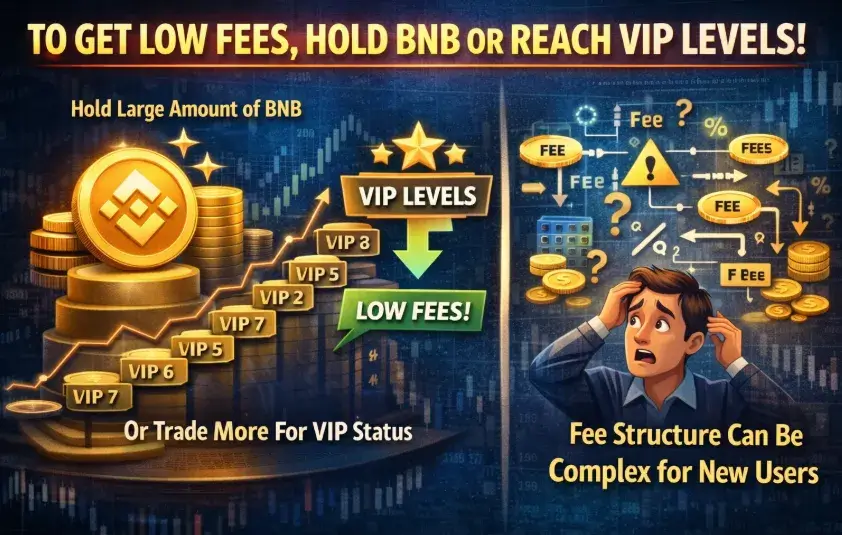
- To get low fees, you must hold BNB or reach higher VIP levels
- Fee structure can be complex for new users
Step 6. Bybit – Competitive for Active Traders
Bybit is especially popular among futures traders.
6-1. Spot Trading Fees
- Non-VIP standard: around 0.10% – 0.20% depending on account level
- Fees decrease significantly with VIP tiers

6-2. Futures Trading Fees
- Fees vary by level, but generally competitive
- Large discounts for high-volume users

6-3. Advantages
- Excellent platform for derivatives
- Good liquidity for major pairs
- Strong professional trading interface

6-4. Disadvantages
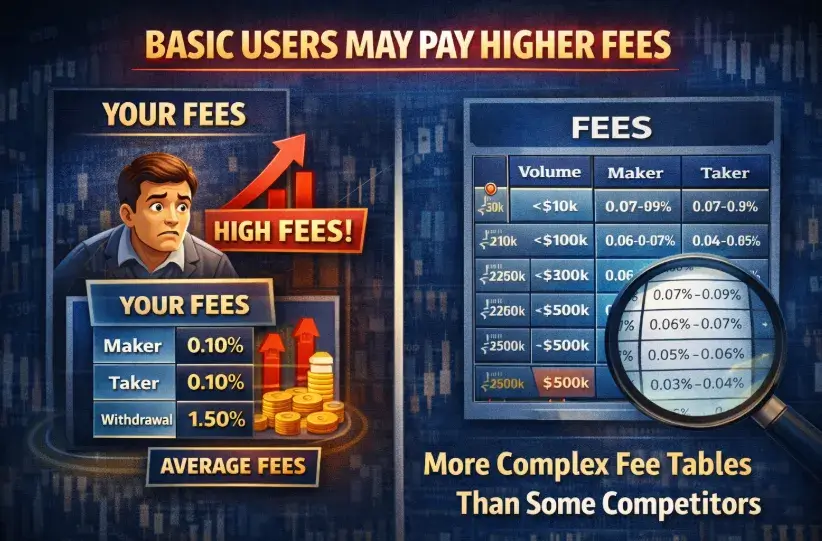
- Basic users may pay higher fees
- More complex fee tables than some competitors
Step 7. OKX – Balanced and Transparent
OKX is known for a clean structure and competitive starting rates.
7-1. Spot Trading Fees
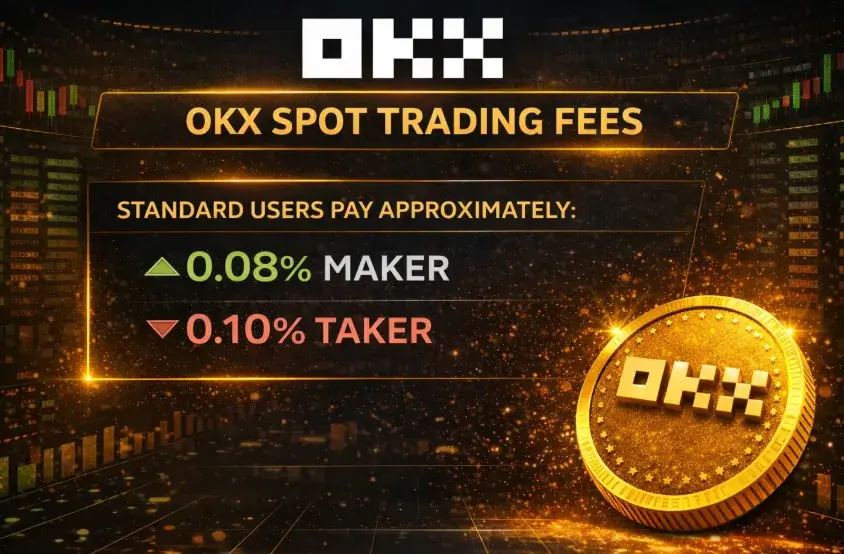
- Standard users: approximately
- 0.08% maker
- 0.10% taker
7-2. Futures Trading Fees
- Common base level:
- 0.02% maker
- 0.05% taker
7-3. Advantages
- Lower entry-level spot fees compared to many exchanges
- Simple VIP system
- Strong liquidity

7-4. Disadvantages
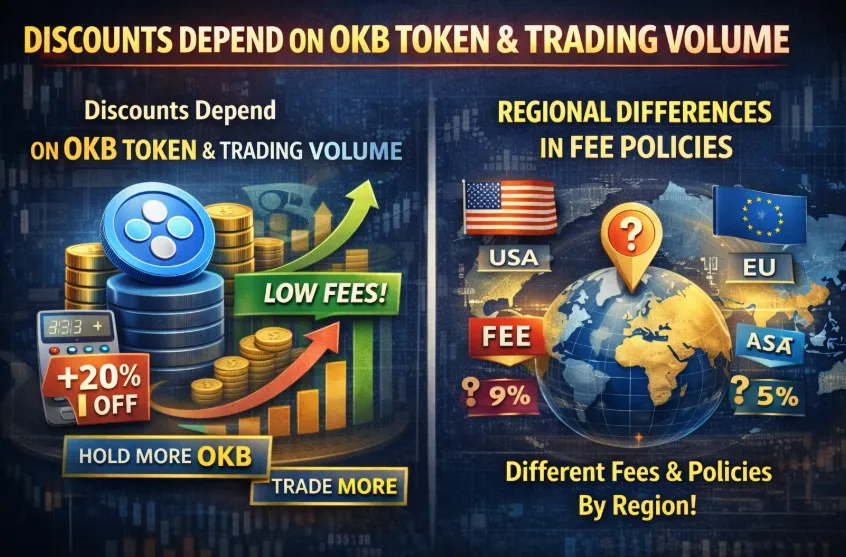
- Discounts depend on OKB token and trading volume
- Regional differences in fee policies
Step 8. Bitget – Strong Discounts with BGB Token
Bitget has rapidly grown in popularity, especially for futures trading.
8-1. Spot Trading Fees
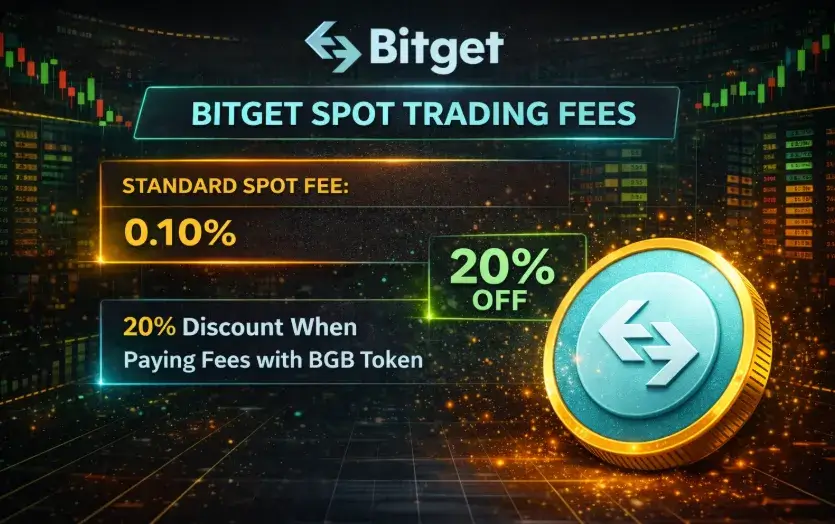
- Standard spot fee: 0.10%
- 20% discount when paying with BGB token
8-2. Futures Trading Fees
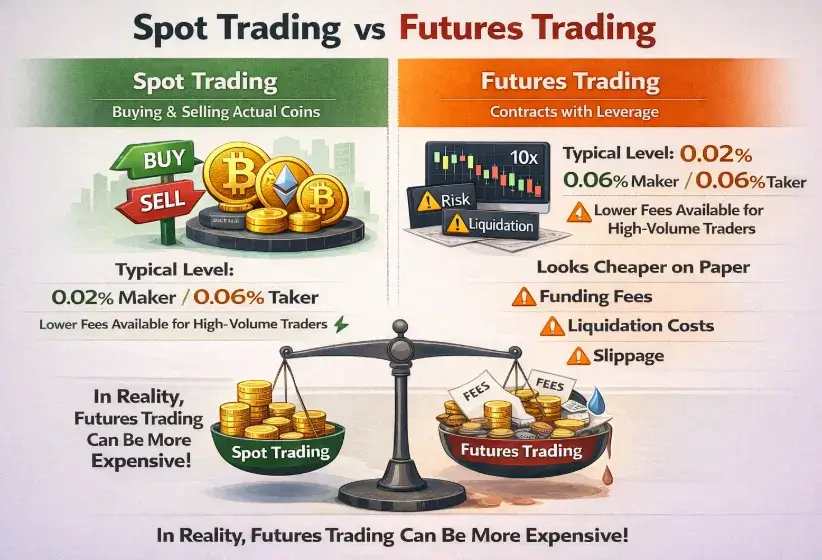
- Typical level:
- 0.02% maker
- 0.06% taker
8-3. Advantages
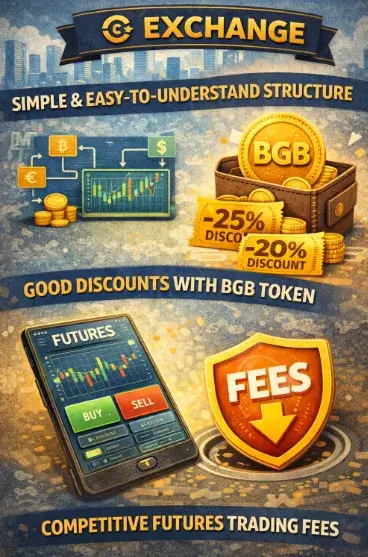
- Simple and easy-to-understand structure
- Good discounts with BGB token
- Competitive futures trading fees
8-4. Disadvantages
- Without BGB token, fees are average
- VIP tiers required for deeper discounts

Step 9. Real Trading Cost – What Most Traders Miss
Many traders only look at the “advertised fee rate.”
This is a big mistake.
Here are the most common hidden costs.
9-1. Using Market Orders Only
If you always trade with market orders, you always pay taker fees.
Even on a low-fee exchange, this can become very expensive over time.
9-2. Ignoring Funding Fees in Futures
Futures trading involves funding payments every few hours.
Even if trading fees are low, funding fees can:
- Reduce profit
- Turn profitable trades into losses
9-3. Slippage on Low Liquidity Coins
Cheap fees mean nothing if:
- Liquidity is low
- Spreads are wide
- Orders execute at bad prices
Always consider real execution cost.
9-4. Withdrawal Strategy
Some exchanges have:
- Cheap trading fees
- But expensive withdrawal fees
Plan where you will send funds before choosing an exchange.
Step 10. Which Exchange Is Best for You?
The best exchange depends entirely on your trading style.
10-1. For Spot Investors
If you mainly buy and hold coins:
- Focus on spot fees
- Consider withdrawal costs
- OKX and Binance often provide good balance
10-2. For High-Frequency Traders
If you trade many times per day:
- Maker/taker difference is critical
- Token discounts (BNB, BGB, OKB) become very important
- Binance and Bitget can be very cost-effective
10-3. For Futures Traders
If you mainly trade with leverage:
- Look beyond trading fees
- Compare funding rates
- Liquidity and slippage matter more than small fee differences
Step 11. Final Conclusion
There is no single “cheapest exchange” for everyone.
You must evaluate:
- Your trading frequency
- Spot vs futures usage
- Withdrawal habits
- Eligibility for VIP tiers
- Token discount availability
The exchange with the lowest advertised fee is not always the cheapest in real life.
Smart traders compare total cost, not just fee percentage.
12. Frequently Asked Questions (Q&A)
Q1: Which exchange has the lowest trading fees overall?
There is no universal answer. Fees depend on account level, trading volume, and whether you use maker or taker orders. Binance, OKX, Bybit, and Bitget all offer competitive rates under different conditions.
Q2: Is spot trading cheaper than futures trading?
Not always. Futures trading fees can appear lower, but funding fees and liquidation risks can make futures more expensive in real situations.
Q3: How can I reduce exchange fees?
You can lower fees by using limit orders (maker), holding exchange tokens such as BNB, OKB, or BGB, and increasing your VIP level through higher trading volume.
Q4: Why does my profit look smaller than expected?
This usually happens because of hidden costs like spread, slippage, funding fees, or high withdrawal fees that were not considered in advance.
Q5: What is more important – fees or liquidity?
Liquidity is often more important. A slightly higher fee on a highly liquid exchange can be cheaper than low fees on an exchange with poor order execution.
💡 Editor’s Note: Maximizing Your Trading Setup
If you’re planning to start trading on Binance, using a partner referral link is the most effective way to reduce long-term costs. You can secure a 20% fee rebate applied directly to your account.
Apply 20% Discount to My Account →