
Learn how to reduce Binance trading fees by up to 45%. This complete guide explains spot and futures fee structures, BNB discounts, VIP levels, funding rates, and hidden trading costs with practical strategies.
1. Binance Fee Reduction Complete Guide: How to Cut Spot and Futures Trading Costs by Up to 45%
When trading cryptocurrency, most investors focus on price action and technical setups. However, over time, trading fees silently reduce total profitability.
In my own experience, even when my trade accuracy improved, my account growth was slower than expected. After reviewing my transaction history, I discovered that accumulated fees were significantly impacting net returns.
As the world’s largest cryptocurrency exchange, Binance offers competitive fee rates. However, without structured optimization strategies, traders consistently overpay.
This guide explains exactly how to reduce trading costs efficiently and sustainably.

2. Understanding Binance Spot, Futures, and Funding Fee Structure
2-1. Spot Trading Fees
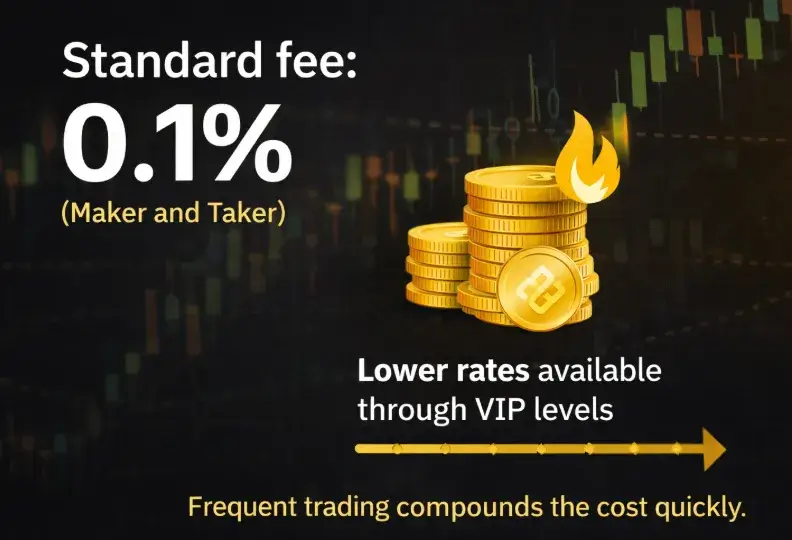
- Standard fee: 0.1% (Maker and Taker)
- Lower rates available through VIP levels
Even though 0.1% appears small, frequent trading compounds this cost quickly.
2-2. Futures Trading Fees (USDT-M Futures)
- Maker: 0.02%
- Taker: 0.04%
- Higher leverage increases effective fee exposure
Because futures traders often execute multiple trades daily, fee structure becomes critically important.

2-3. Funding Fees
Funding fees are exchanged between long and short traders every 8 hours.
Holding positions during extreme funding periods can gradually erode profits, especially for swing or position traders.

3 Five Powerful Strategies to Reduce Binance Fees
3-1. Enable BNB Fee Payment
Using BNB to pay fees activates automatic discounts.
- Spot trading: Up to 25% discount
- Futures trading: Approximately 10% discount
Activation path:
Profile → Fee Settings → Enable “Use BNB to Pay Fees”
Important: BNB price volatility introduces portfolio risk, so avoid over-allocating capital solely for fee discounts.

3-2. Prioritize Maker Orders
Taker orders execute immediately but cost more.
Maker orders provide liquidity and reduce fees.
For active traders, consistently using maker execution can reduce long-term transaction costs significantly.
However, in volatile markets, maker orders may not fill instantly. Execution probability must always be considered alongside fee savings.

3-3. Optimize VIP Level Strategy
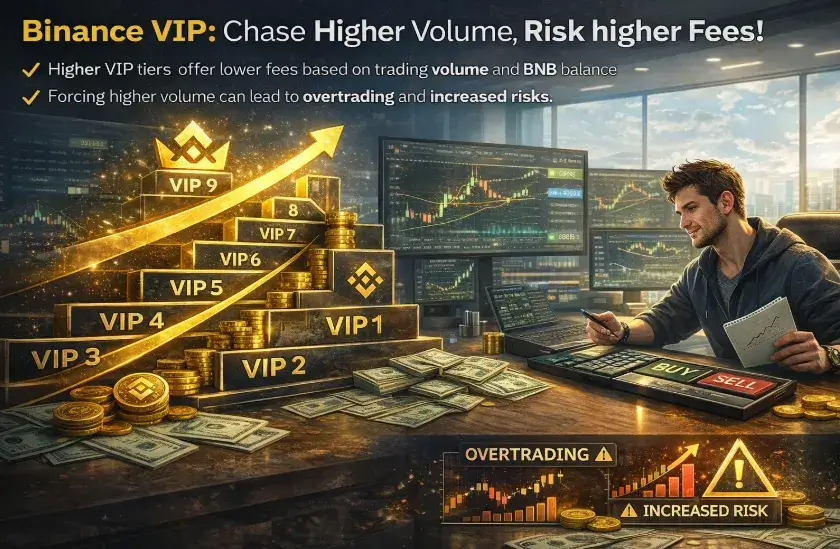
Binance offers tiered VIP levels based on trading volume and BNB balance.
Higher VIP tiers mean progressively lower maker and taker fees.
However, forcing higher volume simply to reach a new tier may lead to:
- Overtrading
- Emotional decision-making
- Increased market risk
A sustainable strategy should allow VIP progression to occur naturally.
3-4. Avoid Excessive Leverage
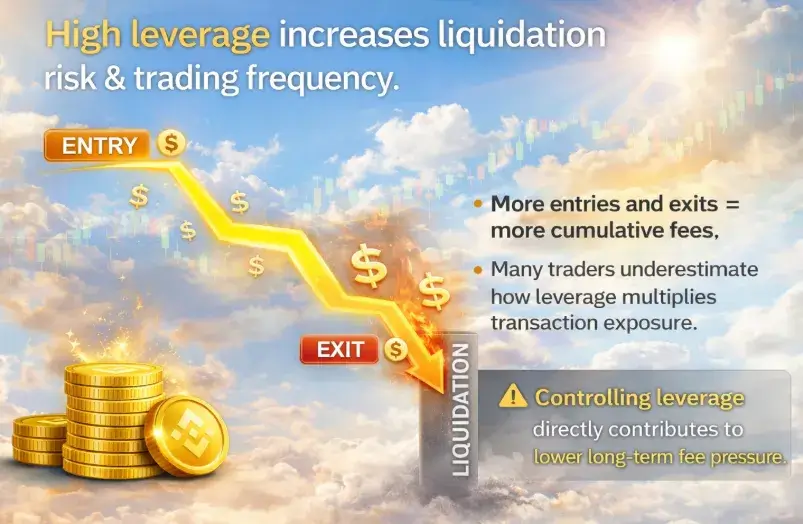
High leverage increases not only liquidation risk but also trading frequency.
More entries and exits = more cumulative fees.
Many traders underestimate how leverage multiplies transaction exposure.
Controlling leverage directly contributes to lower long-term fee pressure.
3-5. Monitor Funding Rates Before Entry
Funding rates fluctuate based on market imbalance.
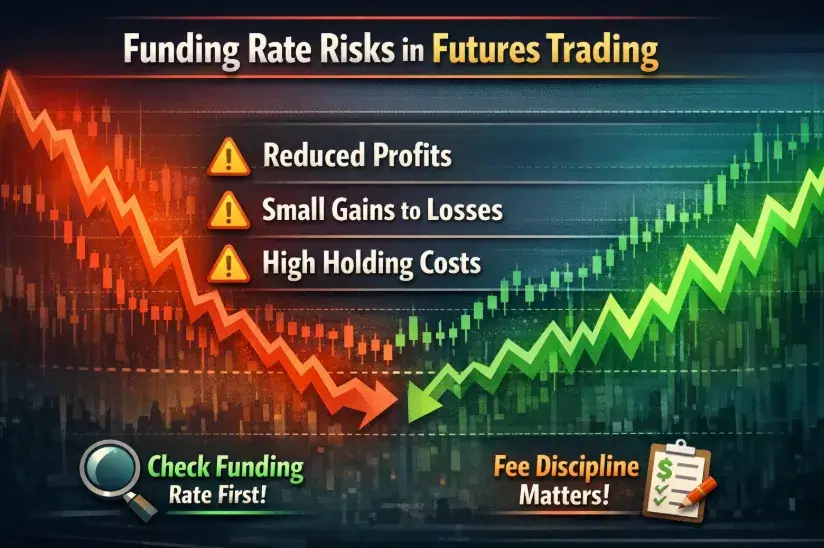
Entering long-term positions during extreme funding periods can:
- Reduce profitability
- Turn small gains into losses
- Create unnecessary holding costs
Always check funding rate before opening a futures position.
Funding awareness is part of fee management discipline.
4. Advantages and Risks of Fee Optimization
4-1. Key Advantages
- Higher net profit retention
- Stronger long-term compounding
- Better capital efficiency
4-2. Realistic Risks
- Exposure to BNB price swings
- Maker orders may not execute in fast markets
- Psychological pressure to maintain VIP tier
Fee optimization is not about cutting corners.
It is about building a structural edge in competitive markets.
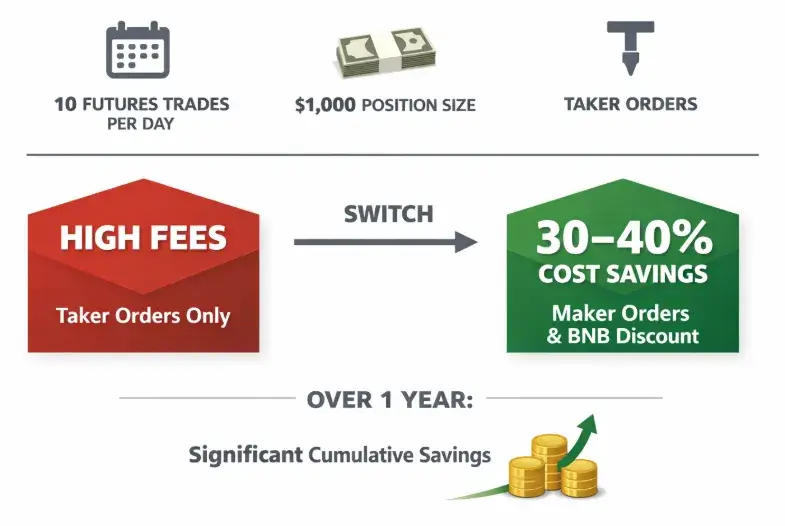
5. Practical Cost Comparison Example
Assume:
- 10 futures trades per day
- $1,000 average position size
- Primarily taker execution
Over one month, fees accumulate noticeably.
By switching to maker orders and enabling BNB discounts, traders may reduce total trading costs by 30–40%.
Over a full year, the cumulative difference can become substantial enough to influence overall account performance.
Small percentage improvements produce large long-term impact.
6. Conclusion: Fee Control Equals Profit Control
Many traders obsess over price prediction and ignore cost structure.
However, consistent profitability depends on:
- Controlling transaction costs
- Optimizing execution method
- Managing leverage exposure
- Monitoring funding rates
Binance provides one of the most competitive fee models in the industry, but only disciplined traders fully benefit from it.
Implement these core principles:
- Activate BNB discount
- Prefer maker orders
- Understand VIP tiers
- Track funding rates
When applied consistently, fee optimization becomes a powerful long-term advantage.
7. Interactive Binance Fee & Profit Calculator
Use this tool to estimate your trading costs and see how much you can save by using BNB discounts.
Referral 20% Discount Calc
Enter amount to see your savings
*Calculated for VIP 0 level traders.
Binance Fee Estimator
Optimize your trading costs for 2026
*Real-time network gas fees and slippage are not included.
8. Additional Resources for You
📊 Strategic Trading Hub on Hyukee.com
Compare Binance’s optimized fee structure with other major platforms like Bybit and OKX.
Determine which trading method offers the best cost-to-profit ratio for your trading style.
Understand the long-term impact of fee structures on your overall investment performance.
💡 Editor’s Note: Maximizing Your Trading Setup
If you’re planning to start trading on Binance, using a partner referral link is the most effective way to reduce long-term costs. You can secure a 20% fee rebate applied directly to your account.
Apply 20% Discount to My Account →9. Frequently Asked Questions (FAQ)
Q1. What are Binance’s standard trading fees?
Spot trading begins at 0.1%, while futures trading starts at 0.02% (Maker) and 0.04% (Taker), with reductions available through VIP tiers and BNB usage.
Q2. How much can I save using BNB for fees?
Spot traders can receive up to 25% discount, and futures traders approximately 10% discount.
Q3. Are maker orders always better?
From a fee perspective, yes. However, execution speed may be slower in volatile conditions.
Q4. Why does funding rate matter?
Funding payments occur every 8 hours in futures markets. High funding rates can reduce long-term profitability.
Q5. Does fee optimization really impact long-term returns?
Yes. For high-frequency or leveraged traders, cumulative fees can significantly affect performance. Reducing structural costs improves overall capital growth.